Blog

The Quest to be Known

The best characters have quirks, flaws, and many facets. So why do we spend so much time in real life hiding these very things?

Writing teachers will always push their students to come up with details that make their characters human. One of the standard tips is to give a character a habit – the quirkier the better. If at first go, the character bites her nails, is there something different she could do that’s even more interesting?

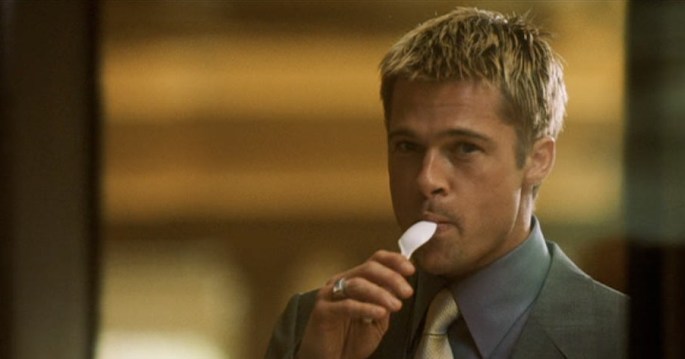
One of my favorite examples is Brad Pitt’s character in Ocean’s Eleven (the whole series, really). That man is always eating. Every scene. No matter what time of day. Almost always messy snacks. I love him all the more for it — in large part, because I feel like I know him a little better.

All of us yearn to be known. We yearn to be understood as whole people, complete with mismatched parts, strange quirks, and many layers. But then we try never to show our bad habits, our guilty pleasures, our odd hangups.

And we wonder why we don’t feel like people know the real us?

A friend told me recently about an experience that touched him deeply, where he got to combine two disparate parts of his life and connect with others that shared the connection. He delighted in the experience, and it also left him feeling a bit emotional. I suspect that he was feeling closer to known — fully and completely.

If you find yourself wishing to be known, if you recognize that you are feeling disconnected, here’s an idea. The next time you’re having a good conversation with someone, see if you can reveal just a little insight into yourself you wouldn’t normally share. See if you can be just a little more honest — with a coworker, a friend, your mailman.

They might just be happy for a window into the real you. And maybe, someday, they will really, truly know you, too.



Can Solar Cars Make Us Happier?

There’s nothing better than when people talk about the things they love. It doesn’t matter if you understand a thing about their “thing,” because just seeing their faces light up is the point. You can literally watch someone drop a protective layer when they talk about their favorite hobby, artist, or experience. For me, it’s rejuvenating just to listen to them – and I don’t have to go anywhere or do anything myself. The lazy art lover’s way of enjoying creativity at play.

I learned this first in college, where one of my friends was head over heels in love with solar car racing. He spent days on end with his team, tinkering, creating, imagining new options. I never once, in all of our conversations, understood what was really happening. But the energy was like viral serotonin, dripping into my psyche and motivating me to work on my own thing.

Recently, I started reading about BOB. BOB is Pamela Paul’s Book of Books — a journal she’s kept of all the books she’s read since she was 17. My Life with Bob: Flawed Heroine Keeps Book of Books, Plot Ensues is her best-selling book about BOB. I haven’t even gotten through the first chapter, but the introduction itself left a mark for me. Paul waxes poetic about books — what they have meant to her, how they have marked key points in her life and concurrently shaped those same milestones. This New York Times Book Review editor manages to put into words what books have meant to her. Regardless of the ensuing plot that her book’s title promises, this homage to reading was worth it all on its own.

As we struggle through tough times, it strikes me that we should spend more time talking about the things we love. Not just doing or partaking in the things we love, but telling others why we love those things, trying to put the magic into words and share.

Sharing our joy will take us far right now. And it doesn’t require that we take days off, or have extra spending cash, or have access to a fancy exhibition or concert. To talk about what we love, all we need is some time and a listening partner. The listener might even benefit more from the experience than the sharer.

No matter how nutty your passion may seem (the nutty passions are the most fun!), please share the things you love. There is so much beauty in this world, and so much that we each don’t get to see. Let’s make sure that we celebrate the things that make us happiest, and give the gift of listening.

It sure as hell beats another hour of CNN. And who knows, you might just discover something new to love.

Chrysanthemums

Having been unable to keep even the most basic green plants alive, flowers feel like alien beings, beautiful and untouchable by the likes of me. But October in New England finds every exterior display outfitted with at least two mums, preferably of a deep red, orange or yellow flavor.

Mums are not merely significant in their plant version, as with many flowers. For as long as there have been pretty plants, we have wanted to paint, press or carve them for posterity. Mums, it turns out, have been the staple of many cultures. Long before the pumpkin patch, they were part of many global traditions, especially in China and Japan, even signifying death in Europe for a time.

So, the chrysanthemum has a lot in common with other time-tested characters:

  • One of its best characteristics, its resilience, is also what got it into trouble for a time. Chrysanthemums are known as fall flowers because they can withstand the change of seasons and drop in temperatures. They look beautiful even when the crisp air comes sweeping through. This is also the reason chrysanthemums came to symbolize death: they were so hardy that they became the flower of choice for gravesides and funerals. Their very toughness, then, made them extremely unpopular for a while — because they were associated with death.
  • It is part of an influential group. In Chinese art, the chrysanthemum is one of the “Four Gentlemen,” which also includes the plum blossom, the orchid, and bamboo. Each one represents one of the seasons. Can you guess the chrysanthemum season? Yup. Fall.
  • It knows what it does best. No matter where in the world it appears, the chrysanthemum is a symbol of fall. In Australia, it is in fact the favorite flower for Mothers’ Day – in part because Mothers’ Day lands in the middle of fall.
  • It means more than meets the eye. Because it’s tough, it lasts, and it doesn’t wilt under pressure, it is a symbol of endurance and long-lasting relationships. It also appears in medicine, teas, soups and more.

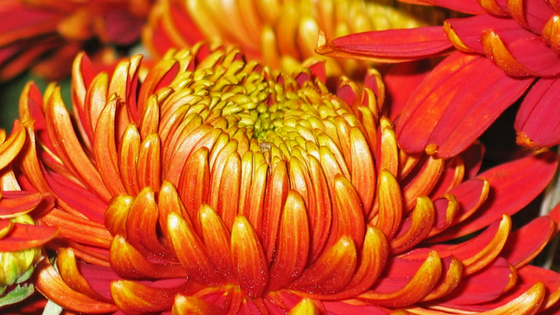
I love the geometry of the petals, the brilliance of the colors, and the immense number of blossoms in one little plant. I love that they are hardy, strong and beautiful, unlikely to give in under pressure of cold, wind or weather.

I like knowing more than meets the eye about most things, and chrysanthemum are no different. Though you likely won’t see one gracing my stoop, I will be able to find you amazing images from across the centuries. Each from different cultures, based on different assumptions. But the same tough plant, standing its ground no matter where it’s planted.

What is part of your every day life that you could see differently today?

Worthy

I’ve been part of an interesting online discussion among aspiring writers, who have been asking, “Is my story worthy of being told?”

It’s essentially an immaterial question for those of us who write for life. Much as I would like to publish and share my writing, that’s not its true function.

A natural answer might be, “Everyone’s story is worthy of being told.” I believe this to be true. Transformation happens when each of us discovers a true voice and the best means of personal expression (whether in an area we officially recognize as “Art” or in doodles or excel spreadsheets or whatever).

But what happens when some stories have been heard, and heard, and heard some more?

It’s our responsibility to make sure that the stories that haven’t been told get told.

It’s our responsibility to raise up and celebrate stories, and to shine a special spotlight on those that haven’t been told often, well or authentically.

Here are a few of my favorite discoveries of late:

  • At a recent Slice Magazine writers’ conference, I was introduced to four amazing poets, whose stories, work and experiences I can’t stop revisiting: Javier Zamora, a Salvadoran-born poet; Hafizah Geter, born in Nigeria; Ricardo Alberto Maldonado, born and raised in Puerto Rico; and Jenny Xie, who moved to the U.S. from China as a child. The panel was focused on how these impressive artists explore their past and heritage in their work, hence why I have highlighted their heritage in this short paragraph. Its not fair, because I should take the space to list each of their extensive accomplishments, because they are formidable poets grappling with important, complex issues. So, there’s your homework – read these poets. They are impressive.
  • Tchaiko Omawale, an independent filmmaker, is in the finishing stages of fundraising for her feature film, Solace, based on her personal story. It promises to be amazing. Check out the trailer.
  • Becoming Nicole: The Transformation of an American Family is a story we should all spend time with. From a very young age, Nicole (born Wyatt) knew she was a “boy-girl,” different from her twin brother. Thanks to support from her mother, eventually her father, and an extended fight for her rights, Nicole was able to realize her true identity.  This book should mark a journey toward empathy and understanding for those who are interested but uninformed about transgender rights, realities and public reaction.
  • Lest we leave the babies out, Roseanne Thong has written children’s books with a unique approach to the old standards. Two stand-outs are: Round is a Mooncake (a book of shapes) and Green is a Chile Pepper (focused on colors). Since I am probably buying more baby presents than anything else right now, I have taken an interest in writers of children’s books with a unique perspective.

Every story is important. Every story can lift us up, whether we relate directly to a particular issue or whether we relate just as one human to another. Every story should be told, and anyone with an urge to create should do so.

But when we see that some stories aren’t getting the press they deserve, that people are not accessing the unique perspectives that enrich our lives, we should speak up. This is a really short list.  Who would you like to lift up?


Slather It On

It gets worse – the news, our realities, the dangers to people we love and people we have never met. Those who were once marginalized are now targeted; those who were once excluded are now directly in the floodlights of hate, violence and policy-level discrimination.

The world feels like the harshest of brilliant lights, 2017 a long trek through the desert. And like any journey, it is no safer to turn around than to continue forward (aside from the fact that it’s impossible to go back, I get that too). So I’m working to slather on the artistic equivalent of SPF1000 sunscreen: a good, thick layer of art, relentlessly reapplied. Such that I may go back out into the trek, at least slightly protected.

The art that builds us up might be in a museum or gallery, but it might not. It might be created by a famous historical figure, but maybe it’s done by your neighbor with a special passion. The definitions should be broad, underscored by the key takeaway: does it work for you?

Here are three things that are making up my sunscreen today:

Pumpkin Art – Around the world this month, harvest festivals will inspire all kinds of cool displays. Some go for the creepy and ghoulish, the cute and clever, the simple and classic. The one I saw recently in photos? Jaw-dropping. I don’t know Kevin or his neighbor(s) but his thread on Twitter stopped me in my tracks. Man-oh-man, this must be incredible to see in person: Pumpkin Dragon!

Perfectly Delightful Story – I just finished Eleanor Oliphant is Completely Fine, an amazing novel that is equal parts entertaining, delightful, tragic and uplifting. I almost didn’t make it in the beginning, because I was reading another book with an extremely quirky main character, and I didn’t know if I could handle two. So glad I did, though. Eleanor’s frankness, intense skills of observation, and utter lack of life experience make her instantly likeable and interesting. She’s that classic person we care and worry about, hoping she’ll make out okay. And she does far more than that.  As someone who writes novels, I was impressed by the ease with which the author, Gail Honeyman, molds a complex story into just the right mix of good, bad, ugly and redemptive. Could not put it down, and I miss Eleanor already.

Soothing Woodwork – My dad introduced me to the master work of Sam Maloof, famous for his wooden rocking chairs and furniture. Maloof created pieces that look like peacefulness embodied. Smooth, always madly respectful of the natural grains of the wood he chose, with gentle curves that look like they might melt if you’re not careful. They are far too expensive for most anyone to own, and sadly, Maloof passed away. But just knowing these exist, and appreciating their artisty, makes me happy.  The Smithsonian article has a few photos.

How do you bolster yourself in these harsh days? What artistry speaks to you? Whatever that is, slather it on — the more, the better.